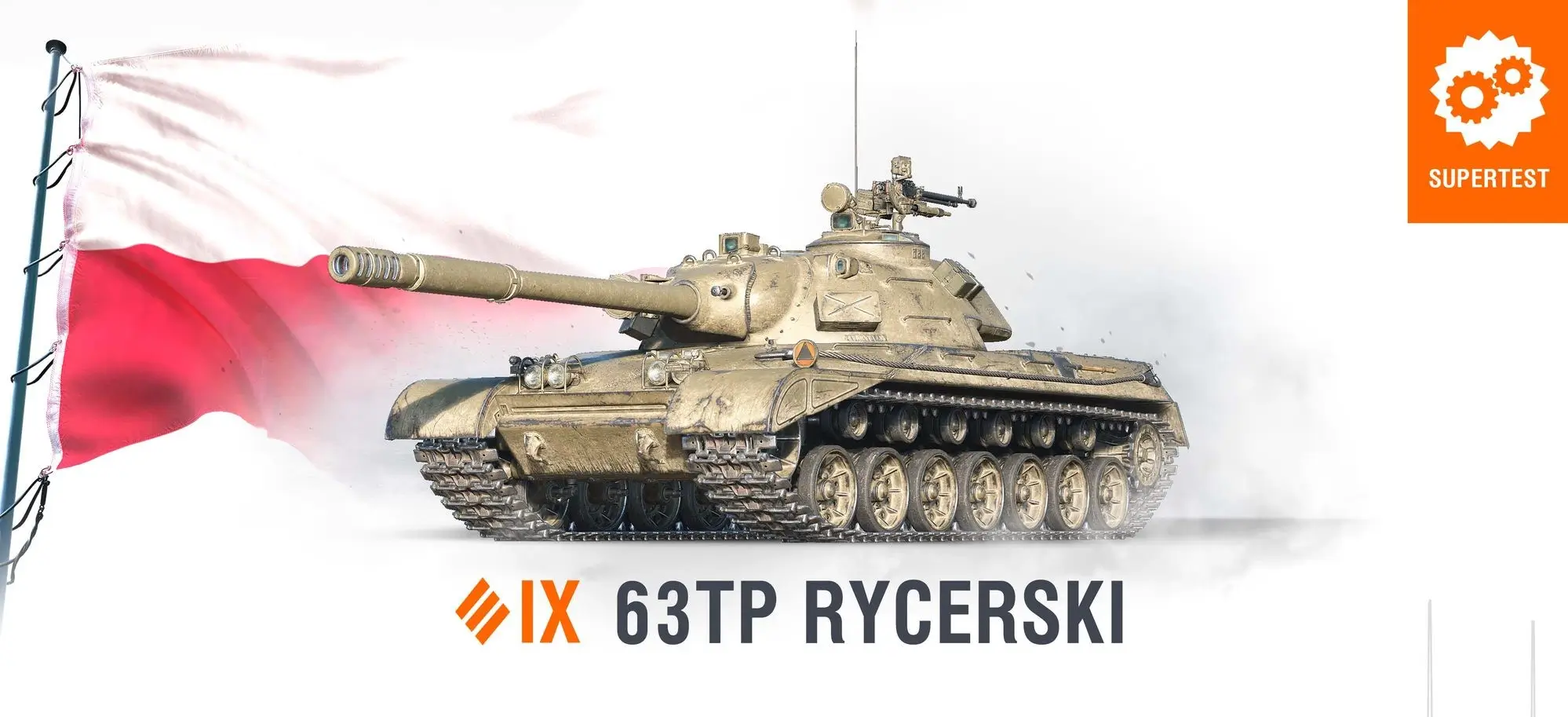
Entering the Supertest as a mobile heavy tank—or “heavium”—it blends the low-profile, sleek geometry of Soviet designs with the heavy-hitting alpha damage and gun depression characteristic of the Polish tech tree. It’s a vehicle built for the modern World of Tanks meta, where mobility is just as vital as the thickness of your steel.
Versatile Firepower: 450 HP Alpha Damage
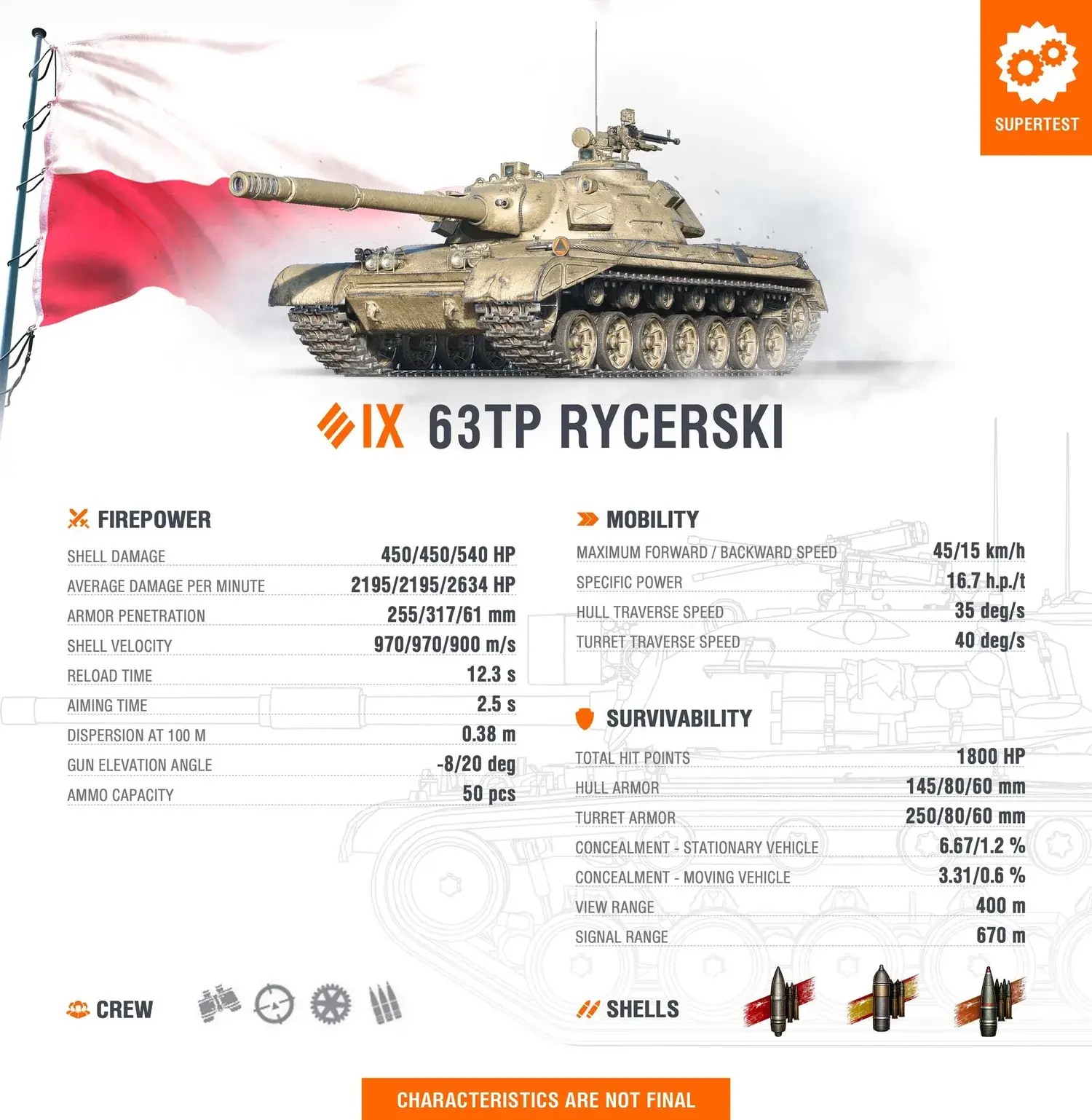
The 63TP Rycerski strikes a perfect balance between rate of fire and per-shot impact:
450 HP Alpha Damage: This is the “Goldilocks” zone for Tier IX. It hits harder than the 400-alpha Soviet heavies but reloads faster than the 490+ alpha behemoths, allowing for more flexible trading.
Solid 2,195 DPM: With a base reload of 12.3 seconds, the Rycerski doesn’t leave you defenseless for long. It has enough sustained fire to punish enemies who overextend.
Balanced Penetration: 255mm on standard rounds and 317mm on premium APCR ensures that even Tier X super-heavies need to respect your presence.
0.38 Dispersion and 2.5s Aim Time: While it isn’t a sniper, these stats are very respectable for a high-alpha heavy, allowing for reliable mid-range support.
Impressive Mobility: 16.7 hp/t
Don’t let the “heavy” tag fool you; the Rycerski moves with a surprising amount of grace:
45 km/h Top Forward Speed: This speed allows the Rycerski to play alongside medium tanks or lead a breakthrough on a heavy flank before the slower defenders can react.
16.7 hp/t Specific Power: This is the secret to the Rycerski’s agility. It has the acceleration to actually reach its top speed and maintain it across uneven terrain, a rarity for heavily armored vehicles.
40 deg/s Turret Traverse: Combined with its 35 deg/s hull traverse, the Rycerski is difficult to circle, making it a nightmare for light and medium tanks that try to get behind it.
Sturdy Turret: -8° Gun Depression
The Rycerski is designed to make the most of every hill and ridge line on the map:
250mm Turret Armor: The rounded, cast-style turret is the centerpiece of the Rycerski’s defense. When facing enemies directly, it provides a formidable barrier that can bounce even high-tier gold rounds.
-8° Gun Depression: Unlike many Soviet-style tanks that are restricted to flat ground, the Rycerski can work ridge lines effectively. This depression, combined with its strong turret, makes it a premier hull-down combatant.
400m View Range: A high base view range allows the Rycerski to spot its own targets, ensuring it doesn’t always have to rely on scouts to get its gun into the game.
Tactical Considerations
Mastering the Rycerski requires a “knight’s” sense of timing and positioning:
Hide the Hull: While the 145mm frontal hull armor is decent, the 1,800 HP pool will disappear quickly if you stay in the open. Use your -8° depression to keep the hull behind dirt and debris.
Exploit the Acceleration: Use your high specific power to take aggressive positions early. You can often reach “medium tank” bushes or corners before the enemy heavies have even left their spawn.
Trade with Confidence: Against lower-alpha mediums, use your 450 damage to win every single exchange. Against big-gun heavies, use your superior mobility to fire while they are on reload.
Playstyle Implications
The 63TP Rycerski rewards a dynamic breakthrough playstyle:
The “Heavium” Anchor: Play it as a heavy tank that refuses to be static. If one flank is failing, use your 45 km/h speed to rotate and reinforce the other side.
The Ridge-Line Bully: Find a hill, park your hull, and let your 250mm turret face the enemy. At Tier IX, very few tanks can efficiently dig a hull-down Rycerski out of a strong position.
Wolfpack Leader: When paired with Tier IX mediums like the T-54 or E 50, the Rycerski provides the necessary “muscle” and alpha damage to break through an enemy medium line.
Community Reception
Initial reactions to the Rycerski have been largely positive, with a few notes of caution:
“The Better 50TP?”: Many players are comparing it to the tech-tree 50TP Tyszkiewicza. While the Rycerski has less alpha (450 vs 560), its superior mobility and gun handling make it look more consistent in the current meta.
Comparison to the Object 777 II: Its silhouette and role are drawing comparisons to the Tier IX reward tanks, with many hoping it will bring that level of performance to the Polish line.
Balanced Stats: Most testers agree that while the tank looks strong, the 1,800 HP and 12.3s reload keep it from feeling “broken” on paper.
What Sets the 63TP Rycerski Apart
The Rycerski occupies a unique space in the Polish heavy line:
Mobility Over Bulk: It trades some of the raw “iron pig” thickness of its predecessors for a level of agility that allows for more active, influential gameplay.
Gun Flexibility: The -8° depression is the “sweet spot” that allows for comfortable play on almost every map in the game.
Reliability: It lacks the gimmicks of some modern tanks, relying instead on high-quality fundamentals—good alpha, good mobility, and a good turret.
What’s Next?
As the 63TP Rycerski continues its journey through the Supertest, Wargaming will be closely watching:
Turret Weakspots: Is the 250mm armor too consistent, or are there cupola/mantlet weaknesses that skilled players can exploit?
Mobility Scaling: Does the 16.7 hp/t make it too fast for a heavy tank? We might see a slight reduction if it starts outperforming mediums in their own roles.
Final Placement: Whether this becomes a new tech-tree entry or a high-tier reward vehicle remains to be seen.
Final Thoughts
The 63TP Rycerski looks like a fantastic addition to Tier IX. It embodies the “modern heavy” philosophy—a tank that can reach the fight, survive the fight, and deliver the damage needed to win the fight. It rewards players who understand map flow and terrain, offering a more versatile and engaging experience than some of the more static heavy tanks at the tier. If you’ve enjoyed the Polish line but wished they had a bit more “get-up-and-go,” the Rycerski is the knight in shining armor you’ve been waiting for.
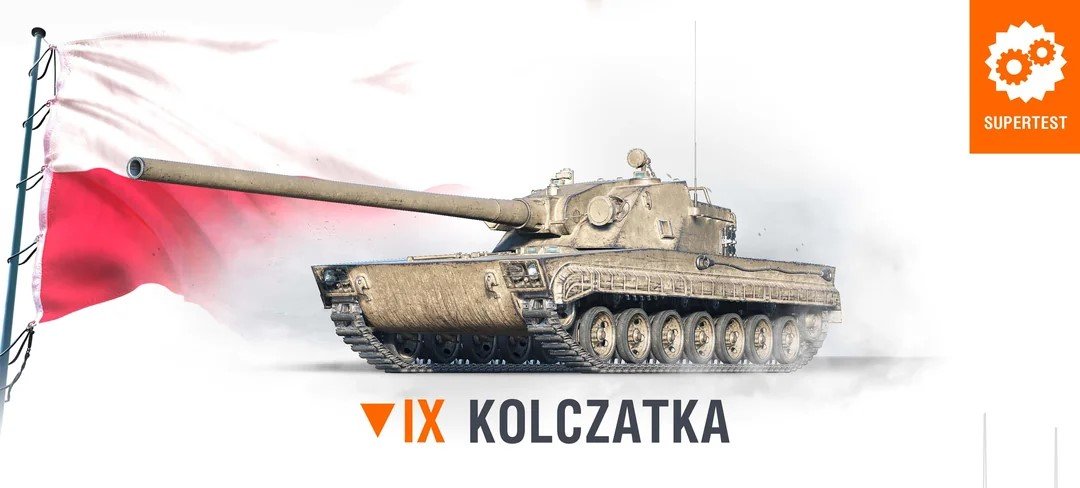
A new predator is emerging from the Polish tech tree: the Kolczatka, a Tier IX tank destroyer that defies the traditional “box on tracks” stereotype. Named after the spiny echidna, this vehicle is designed to be as prickly as its namesake. Entering the Supertest as a hybrid between a sniper tank destroyer and a highly mobile medium tank, the Kolczatka aims to offer a level of flexibility rarely seen in high-tier TDs.
High-Impact Firepower: 600 HP Alpha Damage
The Kolczatka packs a punch that demands respect at Tier IX:
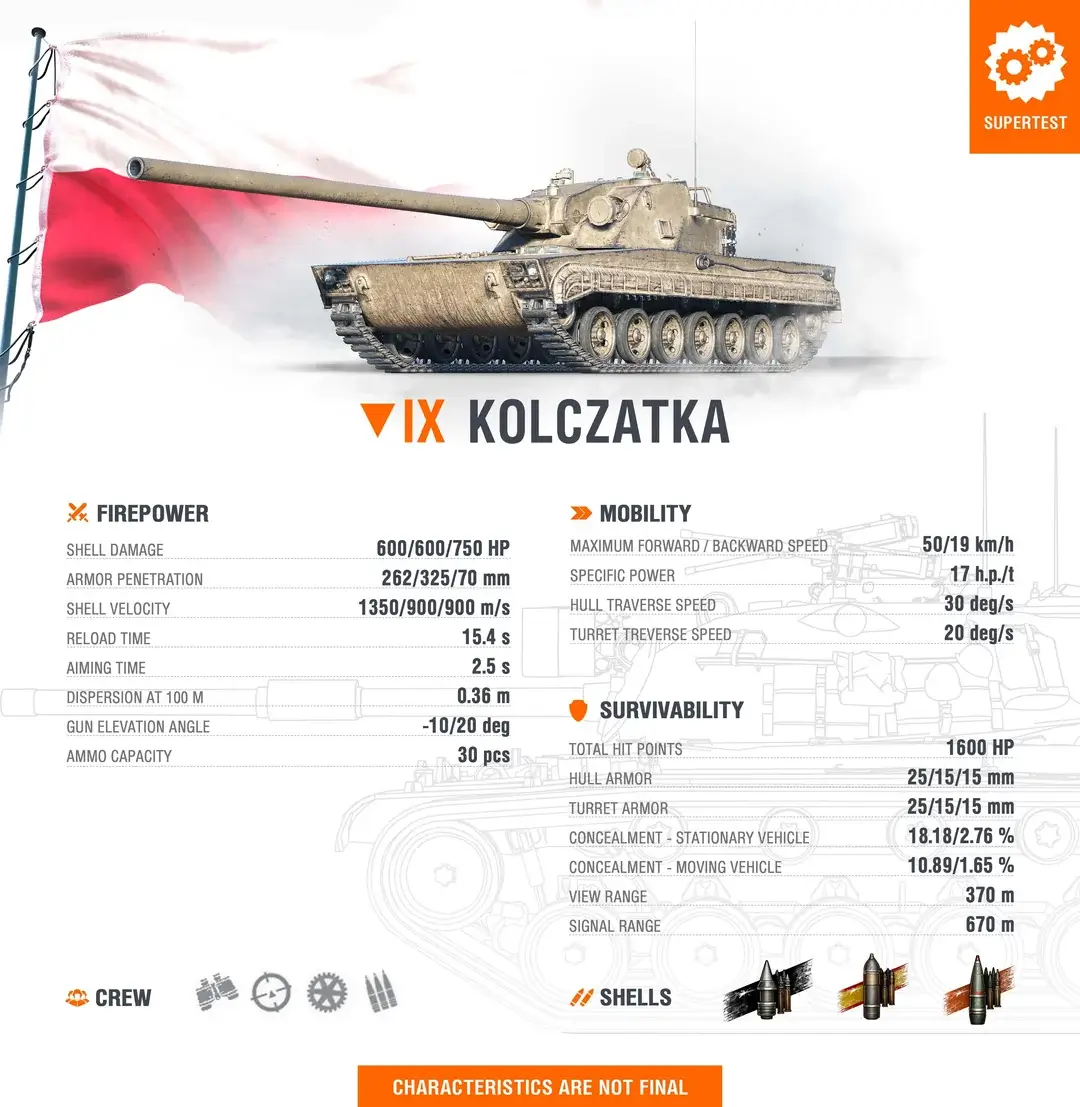
600 HP Alpha Damage: This puts it comfortably ahead of most medium tanks and in direct competition with heavy hitters. A single successful shot can strip away a third of a same-tier opponent’s health.
15.4-Second Reload: While the reload is deliberate, it is the price paid for such high alpha damage on a platform this mobile. It forces a “hit and fade” rhythm that rewards careful timing.
Devastating Trades: In a support role, the Kolczatka can wait for an enemy to fire at a teammate before peeking out to deliver a 600-damage retaliation, winning almost any trade encounter.
Full Turret Flexibility: -10° Gun Depression
What truly distinguishes the Kolczatka from its peers is its mechanical versatility:
Fully Rotating Turret: Unlike many tank destroyers that are limited by narrow gun arcs, the Kolczatka enjoys a full 360-degree turret. This allows it to hold corners, sidescrape, and react to flankers without traversing its entire hull.
-10° Gun Depression: This is the “gold standard” for ridge-line fighting. The ability to work terrain effectively means the Kolczatka can hide its hull and only expose its turret, making it a nightmare to dig out of hull-down positions.
Support Capability: The combination of a turret and excellent depression allows it to fight alongside mediums on uneven terrain, rather than being relegated to the back of the map.
Mobile Support: 50 km/h Top Speed
Mobility is the third pillar of the Kolczatka’s design:
50 km/h Forward Speed: This allows the Kolczatka to keep pace with medium tank wolfpacks. It can reach key aggressive positions early in the match or relocate across the map if a flank collapses.
19 km/h Reverse Speed: A strong reverse speed is vital for a “paper” TD, allowing it to fire and quickly pull back behind hard cover or over a ridge before the enemy can return fire.
Aggressive Repositioning: Because it isn’t slow, the Kolczatka can afford to play aggressively, knowing it has the speed to retreat if the situation turns sour.
Versatile Positioning Philosophy
The Kolczatka is built for the “fluid” battlefield:
Beyond the Redline: While it can snipe, its design encourages “flexible positioning.” It can transition from a long-range overwatch role to a frontline support role as the match dictates.
The Second-Line Specialist: It excels when positioned just behind the heavy tanks, using its turret and alpha to punish enemies who focus on the frontline brawlers.
Dynamic Response: The Kolczatka rewards players who read the map. It is a tank destroyer that can actually influence the game by moving to where the fire is needed most.
Tactical Considerations
To master the Kolczatka, commanders must manage its unique profile:
Armor Awareness: Community reports suggest the armor is quite thin (described by some as “printer paper”). You cannot rely on bounces; your defense is your speed, your gun depression, and your ability to not be hit.
Reload Management: 15.4 seconds is a long time to be vulnerable. Always have a retreat path planned or a friendly tank nearby to cover you while you reload.
Hull-Down is Key: Use that -10° depression. Even if the turret isn’t “invincible,” a smaller target is always harder to hit than a full hull.
Playstyle Implications
The Kolczatka rewards a “Medium-TD Hybrid” playstyle:
The Ridge Hunter: Use your depression to peek over hills, drop a 600-damage bomb, and disappear before the enemy can aim.
The Late-Game Cleaner: In the closing stages of a match, your mobility and alpha allow you to hunt down wounded tanks and trade your HP to secure kills.
Support, Don’t Lead: While it can fight alongside allies, the lack of heavy armor means you should never be the first tank around a corner. Let the heavies take the hit, then use your turret to deliver the punishment.
Community Reception
Initial feedback from the Supertest has been a mix of curiosity and deja-vu:
The “Zmije” Comparison: Many players noted that the model looks identical to the previously tested Czech “Zmije” TD, leading to questions about whether this is a repurposed design or a new branch concept.
Paper Armor Concerns: The community is wary of “glass cannon” vehicles at Tier IX, where high-alpha HE shells and high-tier scouts can make life difficult for unarmored TDs.
Alpha Excitement: Despite the armor concerns, the prospect of a 600-alpha gun on a mobile, turreted platform with -10° depression has many players excited for a new high-skill-ceiling vehicle.
What Sets the Kolczatka Apart
The Kolczatka occupies a rare niche at Tier IX:
The Turreted Advantage: Most Tier IX TDs with big guns are either casemates (like the 704) or have limited turrets (like the T30). A fully rotating turret on a 50 km/h platform is a rare combination.
Polish Versatility: It brings the Polish philosophy of “heavy hits and good depression” to the tank destroyer class, offering a gameplay loop that feels distinct from the German or Soviet TD lines.
What’s Next?
As a Supertest vehicle, the Kolczatka’s stats are far from final. Testing will likely focus on:
Does the 15.4s reload balance out the 600 alpha on such a mobile platform?
Is the armor too weak for the current Tier IX/X meta?
Will this lead to a new Polish TD sub-branch or remain a standalone reward/premium vehicle?
Final Thoughts
The Kolczatka represents an interesting shift toward more active tank destroyer gameplay. By sacrificing raw armor for mobility, a full turret, and excellent gun depression, it offers a “high-risk, high-reward” experience. It isn’t a tank for those who want to sit in a bush all game; it’s a tank for those who want to be in the thick of the action, delivering massive blows and then vanishing before the enemy can react. If Wargaming keeps these flexible traits intact, the Kolczatka could become a favorite for veteran players who value versatility over raw protection.
Characteristics Are Not Final — all information sourced from World of Tanks Supertest announcements.
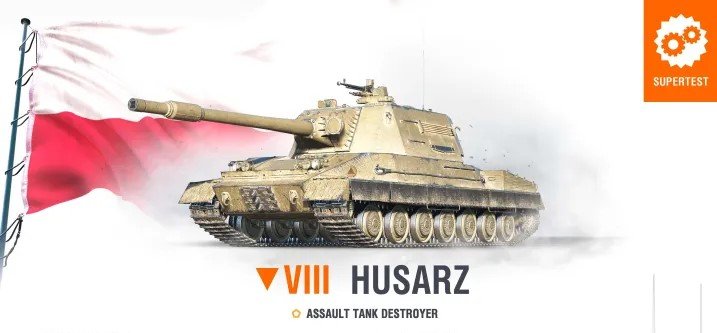
The World of Tanks Supertest has welcomed an intriguing addition to the Polish tank destroyer lineup: the Husarz, a Tier VIII assault tank destroyer whose defining feature is the combination of Poland’s signature deep-rifled gun technology with a fully rotating turret. For players who appreciate the unique damage-at-distance mechanics of Polish TDs but have been frustrated by the turretless limitations of the tech tree vehicles, the Husarz offers a compelling alternative that maintains the close-combat philosophy while adding tactical flexibility.
Deep-Rifled Gun: Distance-Based Devastation
The Husarz inherits the distinctive weapon system that defines high-tier Polish tank destroyers:
Deep-Rifled Gun Technology: The Husarz is equipped with a deep-rifled gun that fires star tray shells at exceptional velocities. These shells are specifically designed to deliver maximum damage at close range, creating a tank destroyer that rewards aggressive positioning rather than long-range sniping.
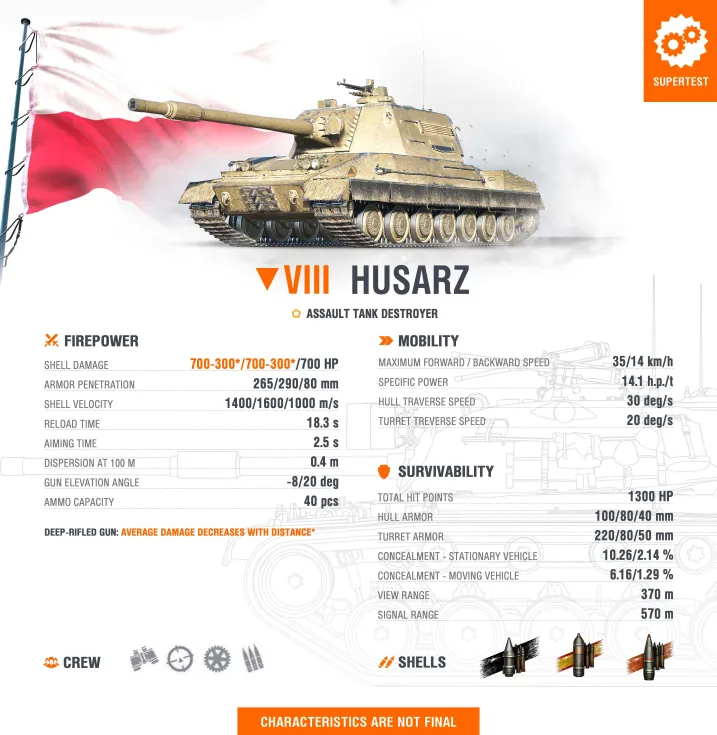
700 HP Alpha Damage at Optimal Range: At distances of 50 meters or less, the Husarz delivers a crushing 700 HP per shot. This alpha damage is exceptional for Tier VIII and creates devastating trading scenarios when the vehicle can close to its preferred engagement range.
Distance-Based Damage Degradation: The star tray shells lose kinetic energy as they travel, resulting in gradually decreasing damage with distance. While the exact damage curve is not yet finalized, the mechanic encourages commanders to seek close-range engagements where the Husarz’s firepower is most potent.
Exceptional Shell Velocity: Following the pattern of other Polish tank destroyers at Tier VIII and above, the deep-rifled gun fires shells at incredibly high velocities. This characteristic reduces lead time on moving targets and makes landing shots at medium range significantly easier despite the damage falloff.
Close-Combat Philosophy: The deep-rifled gun mechanics create a tank destroyer that fundamentally operates differently from traditional sniping platforms. The Husarz wants to be in the thick of the battle, using its 700 HP punches at ranges where other tank destroyers would feel vulnerable.
Fully Rotating Turret: The Game Changer
The Husarz’s most significant departure from the tech tree Polish TDs is its turret:
Full 360-Degree Rotation: Unlike the turretless SDP 58 Caliber and SDP 60 Gonkiewicz that preceded it in the Polish TD line, the Husarz features a fully rotating turret. This single characteristic transforms the vehicle’s tactical capabilities and playstyle possibilities.
Simplified Target Tracking: The fully rotating turret makes tracking moving targets dramatically easier. Commanders no longer need to constantly reposition the entire hull to keep enemies in the firing arc, enabling more responsive engagements and better sustained fire.
Reduced Exposure Time: With a turret, the Husarz can fire from positions where only the turret is exposed, protecting the hull and reducing the vehicle’s profile. This capability enables ridge-fighting and hull-down tactics that are impossible for turretless vehicles.
Flexible Positioning Options: The turret enables the Husarz to engage threats from multiple directions without extensive hull repositioning. This flexibility is invaluable in close-quarters urban combat and when defending positions against attacks from multiple angles.
Trading Efficiency: The ability to quickly aim and fire without hull alignment significantly improves trading efficiency. The Husarz can peek, fire its 700 HP shot, and retreat to cover faster than turretless counterparts, minimizing exposure to return fire.
Decent Armor Protection: Withstanding the Frontline
The Husarz brings meaningful armor to support its close-combat role:
Protection Against Tier VIII and Below: The armor is specifically designed to withstand standard shells from Tier VIII vehicles and lower tiers. This protection level enables the Husarz to confidently engage same-tier and lower opponents without immediately succumbing to return fire.
Assault Tank Destroyer Classification: The “assault” designation indicates the Husarz is expected to operate at the frontline rather than from second-line sniping positions. The armor supports this aggressive role by providing survivability in direct confrontations.
Frontal Protection Priority: While specific armor values have not been released, the protection is likely concentrated in the frontal arc to support head-on engagements. Commanders should avoid exposing side and rear armor unnecessarily.
Tier IX-X Vulnerability: Against top-tier opponents, the armor will be penetrable by most standard rounds. The Husarz must rely on tactical positioning, cover usage, and the fully rotating turret to maximize survivability in bottom-tier battles.
Balance Trade-Off: The decent armor protection is balanced against the vehicle’s limited mobility, creating a tank destroyer that can absorb some punishment but cannot rely on speed to escape unfavorable situations.
Limited Mobility: Methodical Advancement
The Husarz’s mobility characteristics support deliberate, calculated gameplay:
35 km/h Maximum Forward Speed: The top speed is notably limited for a Tier VIII vehicle, restricting the Husarz’s ability to rapidly relocate or respond to developing battlefield situations. This vehicle is committed to its chosen position more than most contemporaries.
14 km/h Reverse Speed: The reverse speed is functional but not exceptional, providing adequate capability to retreat from danger but not the rapid disengagement potential of faster vehicles. Commanders must plan escape routes in advance.
Methodical Positioning: The limited mobility reinforces the Husarz’s identity as an assault tank destroyer that advances deliberately rather than racing to forward positions. Each movement decision carries weight since repositioning is time-consuming.
Map Awareness Requirement: The mobility limitations demand superior map reading and positioning anticipation. The Husarz cannot afford to commit to positions that become untenable, as extracting from mistakes is difficult.
Close-Range Optimization: The limited speed paradoxically supports the deep-rifled gun’s close-range philosophy. The Husarz is designed to reach an advantageous position, establish itself, and dominate that space rather than constantly roaming.
18.3 Second Reload: Punishing Mistakes
The Husarz’s reload time creates distinct engagement rhythms:
18.3 Second Base Reload: The reload time is substantial but appropriate for the 700 HP alpha damage at optimal range. This reload creates clear windows of vulnerability that opponents can exploit if the Husarz misses or fires at a target that quickly retreats.
Lower DPM Than Tech Tree: The Husarz explicitly trades sustained damage output for the tactical flexibility of the rotating turret. The DPM will not match the turretless tech tree Polish tank destroyers, emphasizing quality of shots over quantity.
Shot Discipline Requirement: With an 18.3 second reload, every shot must count. Wasting shells on low-percentage shots or targets beyond the deep-rifled gun’s optimal range significantly reduces the Husarz’s effectiveness.
Trading Opportunities: The 700 HP alpha combined with decent armor creates favorable trading scenarios even with the lengthy reload. A single Husarz shot trades nearly equal HP with two shots from many Tier VIII mediums.
Vulnerability Windows: After firing, the Husarz enters a lengthy vulnerable period. Intelligent opponents will push aggressively during this reload window, requiring the Husarz to have strong positional support or escape routes prepared.
Methodical Frontline Pressure
The Husarz’s design philosophy emphasizes calculated aggression:
Assault Tank Destroyer Identity: The Husarz is designed to operate at the frontline, using its armor and devastating alpha to create space and punish opponents who challenge its position. This is not a second-line sniper but a direct combat vehicle.
Close-Range Dominance: At distances under 50 meters, the Husarz’s 700 HP alpha damage is nearly unmatched at Tier VIII. Enemies who enter this range face the prospect of losing massive HP chunks with each engagement.
Controlled Advances: The limited mobility encourages steady, deliberate advances rather than aggressive rushes. The Husarz excels when supporting team pushes, using its armor and alpha to break enemy resistance.
Turret Exploitation: The fully rotating turret enables the Husarz to control larger areas than turretless TDs. Positioning at corners or choke points allows the vehicle to threaten multiple approach angles without hull repositioning.
Zone Control: Once established in a strong position, the Husarz’s combination of armor, alpha damage, and turret creates an area of denial that opponents must respect or suffer catastrophic HP loss.
Tactical Considerations
The Husarz’s unique characteristics create specific tactical opportunities:
Optimal Range Awareness: Success requires constant awareness of engagement distances. The Husarz performs best under 50 meters where the deep-rifled gun delivers maximum damage, with effectiveness declining as range increases.
Turret Positioning: Leverage the fully rotating turret by taking positions where only the turret is exposed. Ridge lines and corners become premium locations for the Husarz to deliver damage while minimizing return fire.
Engagement Selection: Choose targets carefully. The 18.3 second reload means missed shots or poorly chosen targets represent significant lost damage potential. Prioritize immobilized, distracted, or guaranteed-hit targets.
Team Coordination: The Husarz thrives when operating with teammates who can draw enemy fire, create crossfire opportunities, or finish wounded opponents during the Husarz’s reload cycle.
Urban Combat Preference: City maps and close-quarters areas favor the Husarz’s strengths. The limited mobility is less punishing in tight spaces, and the close engagement ranges maximize the deep-rifled gun’s damage.
Playstyle Implications
The Husarz rewards commanders who embrace calculated, position-focused gameplay:
Patience Over Aggression: While classified as an assault TD, the Husarz requires patience. Rushing forward recklessly wastes the armor against superior firepower and places the vehicle beyond viable retreat range given the limited mobility.
Distance Management: Constantly evaluate engagement distances. If enemies are consistently beyond 50 meters, either advance closer or consider relocating to an area where close-range combat is more likely.
Cover Discipline: Use hard cover aggressively. The 18.3 second reload creates extended vulnerability windows that must be spent behind protection, not exposed to enemy fire.
Hull Angle Awareness: Despite having a turret, hull positioning still matters. The armor works best when properly angled, and exposing flat surfaces to enemy fire wastes the protection the vehicle provides.
Commanders looking to master the Husarz should consider:
Prioritizing positions that facilitate close-range engagements under 50 meters
Using the rotating turret to minimize hull exposure and maximize protection
Selecting targets who will remain exposed long enough to justify the 18.3 second reload investment
Advancing with team pushes rather than attempting solo carries
Learning maps to identify positions where the limited mobility is least punishing
Timing shots to maximize damage at optimal range rather than firing at any available target
Coordinating with teammates to exploit the Husarz’s reload vulnerability windows
Community Reception
Initial community reactions to the Husarz reveal polarized perspectives:
“Finally, a Polish TD with a Turret”: Many players expressed enthusiasm about the fully rotating turret, viewing it as a significant quality-of-life improvement over the turretless tech tree vehicles while maintaining the unique deep-rifled gun mechanics.
DPM Concerns: Community discussion immediately focused on the explicitly mentioned lower DPM compared to tech tree counterparts. Some players questioned whether the turret flexibility adequately compensates for reduced sustained damage output.
Mobility Skepticism: The limited 35 km/h top speed generated concerns about whether the Husarz can consistently reach favorable positions before battles develop, particularly on large open maps where mobility is crucial.
“No Armor, No Speed, Just Alpha”: A vocal segment dismissed the Husarz as having inadequate protection for bottom-tier matchmaking, insufficient mobility for tactical flexibility, and relying too heavily on the 700 HP alpha to carry its weight.
Premium Speculation: With no tech tree placement mentioned, community speculation immediately turned to whether the Husarz would be a premium vehicle, reward tank, or potential addition to an alternative Polish TD branch.
What Sets the Husarz Apart
The Husarz occupies a unique position in the Tier VIII tank destroyer landscape:
First Turreted Polish TD: The Husarz is the first Polish tank destroyer to feature a fully rotating turret, breaking the turretless tradition of the tech tree line while maintaining the signature deep-rifled gun mechanics.
Distance-Based Damage with Turret Flexibility: The combination of star tray shell damage degradation with a rotating turret creates gameplay that rewards close positioning while providing the tactical adaptability that turretless vehicles lack.
Assault Classification with Traditional Limitations: Unlike highly mobile assault TDs, the Husarz embraces limited mobility and relies on armor and positioning to fulfill its frontline role, creating a more methodical interpretation of the assault tank destroyer concept.
700 HP Close-Range Devastation: The maximum alpha damage at optimal range is exceptional for Tier VIII, creating a vehicle that absolutely punishes enemies who enter its preferred engagement envelope.
Unique Positioning Requirements: The deep-rifled gun’s range-dependent damage creates positioning considerations unlike any other tank destroyer, requiring constant evaluation of whether current engagement distance maximizes effectiveness.
What’s Next?
As a Supertest vehicle, the Husarz’s characteristics remain subject to adjustment. Key questions for testing include:
Is 700 HP alpha damage at close range balanced with the 18.3 second reload and limited DPM?
Does the damage degradation curve appropriately balance close-range devastation with long-range viability?
Is the armor sufficient to support the assault tank destroyer role, or will bottom-tier matchmaking be punishing?
Can the limited 35 km/h mobility enable the Husarz to reach favorable positions consistently across different map types?
Will this be a premium vehicle, reward tank, or tech tree addition?
How will the fully rotating turret impact balance compared to turretless tech tree Polish TDs?
Does the Husarz’s playstyle create a compelling alternative to existing Tier VIII tank destroyers?
Final Thoughts
The Husarz represents an ambitious attempt to evolve the Polish tank destroyer formula. By combining the distinctive deep-rifled gun mechanics with a fully rotating turret, Wargaming has created a vehicle that addresses one of the main frustrations of turretless tank destroyers while maintaining the unique close-combat identity that defines the Polish TD line.
For commanders who appreciate high-alpha gameplay, enjoy close-quarters combat, and value the tactical flexibility of a rotating turret, the Husarz offers an intriguing package. The 700 HP alpha damage at optimal range creates devastating engagement potential, and the turret eliminates the constant hull repositioning that makes turretless TDs frustrating in dynamic situations.
However, the Husarz demands significant compromises. The limited mobility restricts tactical options and makes poor positioning decisions difficult to correct. The explicitly lower DPM compared to tech tree vehicles means the Husarz cannot sustain fire in extended engagements. The armor, while decent against same-tier opponents, will struggle in bottom-tier matchmaking where Tier IX and X opponents can penetrate easily.
The distance-based damage mechanics create a unique skill ceiling. Commanders must constantly evaluate engagement ranges, understanding that a 700 HP shot at 50 meters degrades to significantly less damage at longer distances. This mechanic rewards positioning discipline and punishes passive, long-range gameplay in ways that traditional tank destroyers do not.
Whether you’re excited about Poland’s first turreted tank destroyer or concerned that the limited mobility and lower DPM will create a frustrating experience, the Husarz undeniably offers something different at Tier VIII. If Wargaming can successfully balance the damage curve, armor profile, and mobility constraints, the Husarz could become a favorite for players who enjoy methodical, position-focused gameplay with devastating close-range punch.
For those who have struggled with the turretless limitations of the Polish tech tree but love the deep-rifled gun philosophy, the Husarz might be exactly what you’ve been waiting for.
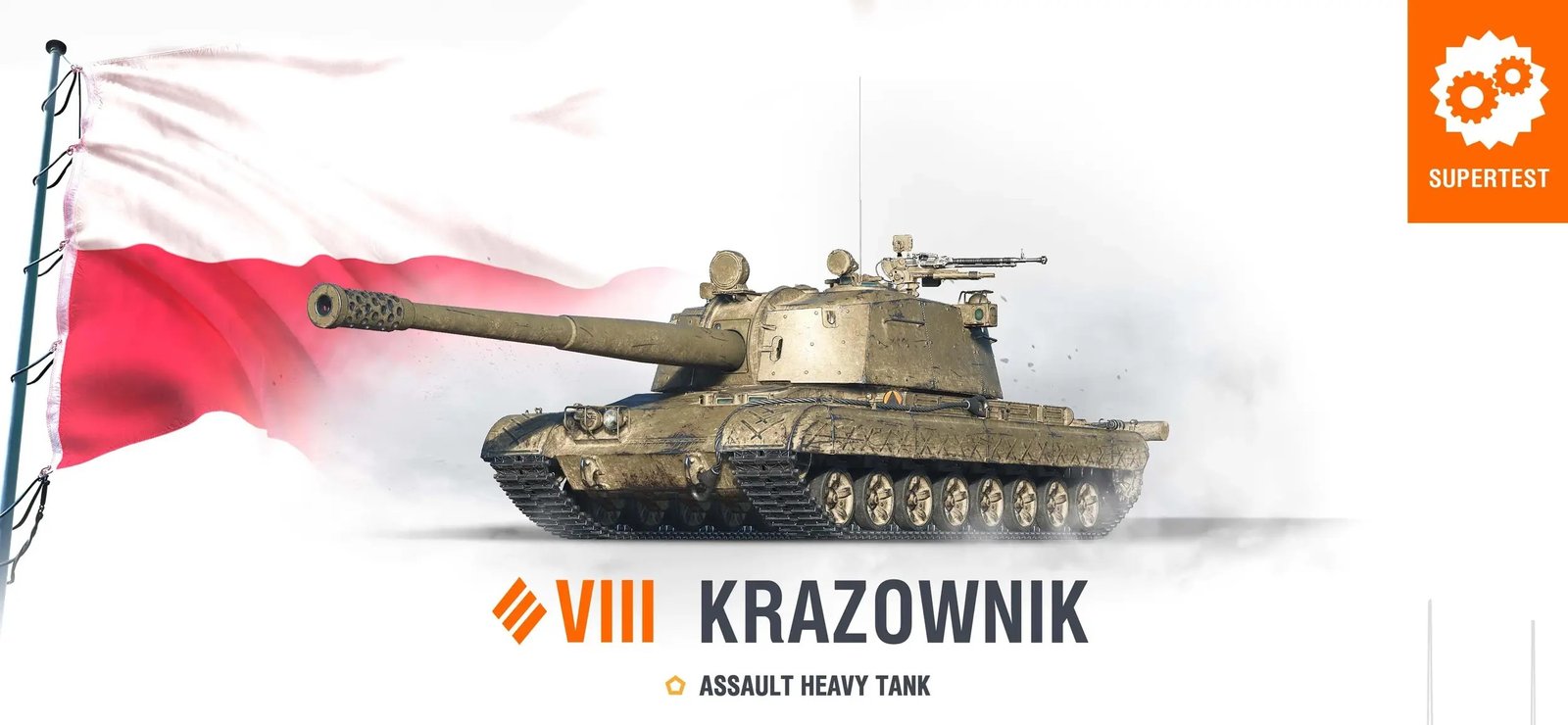
This vehicle combines high single-shot damage with reliable armor protection and surprisingly comfortable gun handling, creating what developers describe as “one of the most versatile assault heavy tanks available.” For players seeking a well-rounded Tier VIII heavy that can adapt to various tactical situations without glaring weaknesses, the Krazownik offers an intriguing package that emphasizes balance over specialized excellence.
High Alpha Damage: 490 HP Punch
The Krazownik brings substantial firepower to Tier VIII battles:
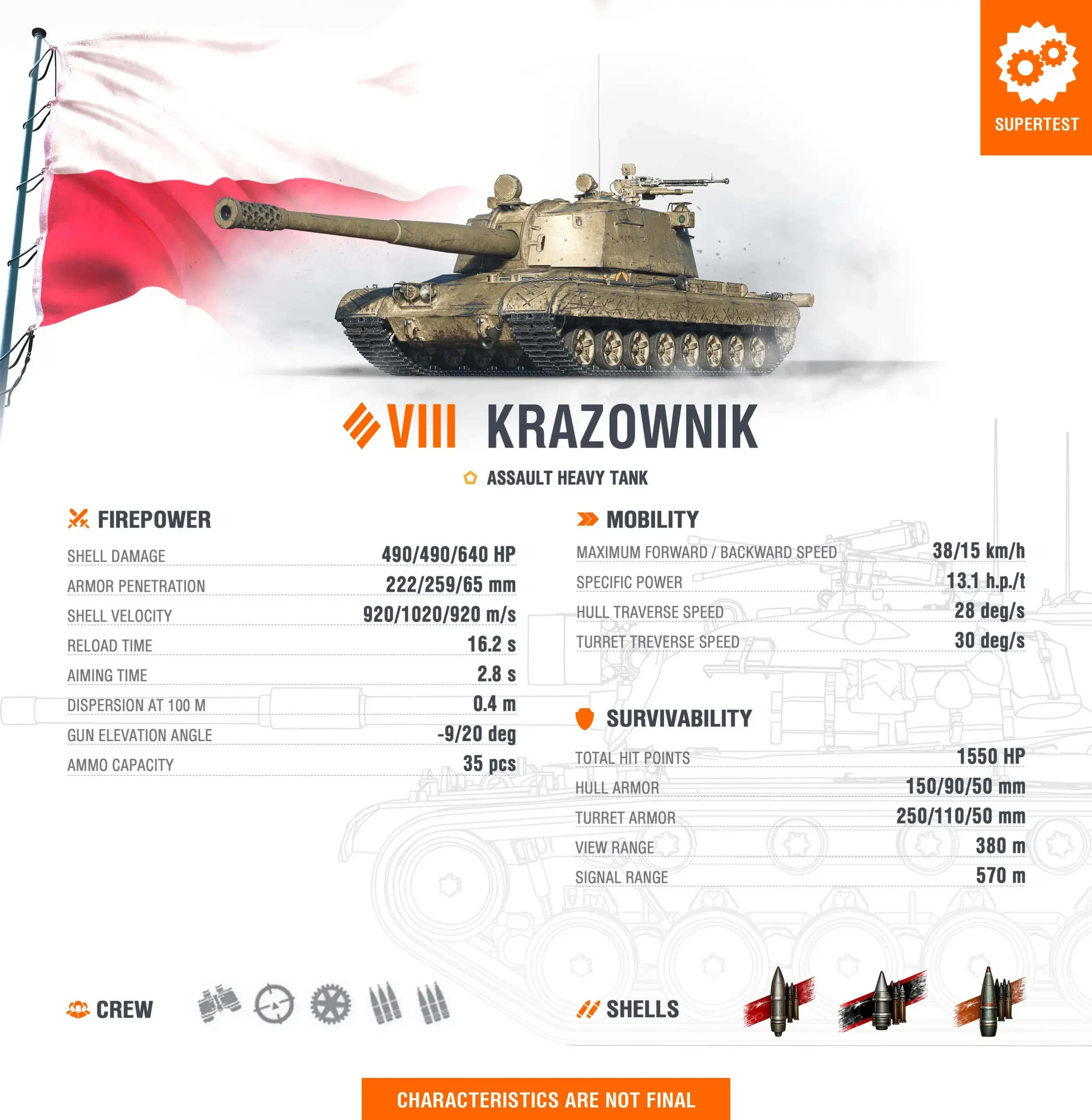
490 HP Alpha Damage: Each shot delivers 490 HP of damage, placing the Krazownik among the harder-hitting Tier VIII heavy tanks. This alpha damage enables meaningful trades and the ability to punish exposed enemies decisively.
High-Alpha Advantages: The 490 HP per shot creates several tactical benefits:
Winning HP trades against lower-alpha opponents
Finishing wounded enemies before they can escape
Creating psychological pressure on opponents
Maximizing damage during brief exposure windows
Tier VIII Power: At Tier VIII, 490 alpha damage is exceptional. Most same-tier heavies deal 390-440 HP, making the Krazownik’s firepower stand out significantly.
Trading Efficiency: In typical heavy tank confrontations, the Krazownik can deliver crushing blows that create favorable exchange ratios, particularly against opponents with standard 390-400 HP guns.
The high alpha damage forms the foundation of the Krazownik’s assault heavy identity, enabling aggressive positioning that would be less effective with lower per-shot damage.
Reliable Armor: Hull and Turret Protection
The Krazownik features dependable armor characteristics:
Reliable Hull Armor: The hull protection is described as “reliable,” suggesting meaningful frontal armor that can bounce shots from same-tier opponents when properly positioned and angled.
Reliable Turret Armor: The turret armor similarly offers “reliable” protection, enabling the Krazownik to trade shots with confidence when hull-down or in frontal confrontations.
Assault Heavy Design: The armor package supports the assault heavy classification—sufficient protection to push into contested positions and hold ground while delivering high-alpha punches.
No Weak Spot Vulnerabilities: The description doesn’t mention glaring weaknesses, suggesting the Krazownik avoids the obvious cupola or lower plate vulnerabilities that plague some heavy tanks.
Angling Benefits: With reliable frontal armor on both hull and turret, proper angling should enable the Krazownik to maximize its protection and bounce shots that would penetrate if faced directly.
The armor doesn’t make the Krazownik invulnerable, but provides the protection necessary to execute assault heavy tactics effectively.
Comfortable Gun Handling
The Krazownik offers surprisingly good gun characteristics for its alpha damage:
-9 Degrees Gun Depression: The gun depression is exceptional for a heavy tank, matching or exceeding most American heavies. This depression enables effective use of terrain features and hull-down positions that other nations’ heavies cannot access.
222mm Standard Penetration: The AP shell penetration is solid for Tier VIII, handling most same-tier opponents effectively without requiring excessive premium round usage. This penetration ensures the high alpha damage can be consistently applied.
Respectable Stabilization: The gun features “respectable stabilization,” suggesting good dispersion values during movement and turret traverse. This stability enables more reliable snapshot opportunities and reduces the need for lengthy aim times.
Comfortable for Damage: The description specifically notes the gun is “quite comfortable for its damage per shot,” indicating Wargaming has balanced the gun handling to prevent the Krazownik from suffering the typical accuracy and aim time penalties that often accompany high-alpha guns.
No Major Penalties: Unlike some high-alpha heavies that sacrifice gun handling for damage, the Krazownik maintains comfortable handling characteristics that make the firepower practically applicable rather than theoretical.
The gun handling package ensures the 490 HP alpha damage can be delivered reliably rather than being hampered by poor accuracy or excessive aim time.
Decent Mobility for an Assault Heavy
The Krazownik offers respectable mobility considering its armor protection:
38 km/h Top Speed: The maximum forward speed is decent for a heavily armored Tier VIII assault heavy. This speed enables tactical repositioning and keeps the Krazownik relevant as battle lines shift.
15 km/h Reverse Speed: The reverse speed is adequate for tactical retreats after delivering shots or when positions become untenable. While not exceptional, it’s sufficient for backing out of unfavorable situations.
Mobility-Armor Balance: The description specifically notes the mobility is “decent… considering the amount of armor it carries,” acknowledging the traditional trade-off between protection and speed while suggesting the Krazownik achieves a favorable balance.
Assault Capability: The mobility supports the assault heavy role—fast enough to advance with pushes and relocate between positions, but not so fast as to compromise the armor protection.
Consistent Battlefield Presence: The combination of 38 km/h forward and adequate reverse ensures the Krazownik can maintain relevant positioning throughout battles rather than being stuck in initial deployments.
The mobility package ensures the Krazownik remains flexible and adaptable rather than being locked into static defensive gameplay.
Tactical Considerations
The Krazownik’s balanced characteristics create clear tactical opportunities:
Versatile Positioning: Unlike specialized heavy tanks limited to specific positions, the Krazownik can function in hull-down situations (leveraging -9 degrees depression), frontal brawls (using reliable armor), or aggressive assaults (utilizing 490 HP alpha).
Hull-Down Exploitation: The -9 degrees gun depression opens up ridge-fighting positions that most heavy tanks cannot access. Combined with reliable turret armor, this creates nearly impenetrable positions on favorable terrain.
Alpha Trading: The 490 HP damage rewards calculated trading. Wait for opponents to expose themselves, deliver your shot, and retreat to cover while reloading. The high alpha ensures favorable exchange ratios.
Push Leadership: The combination of reliable armor and high alpha makes the Krazownik effective at leading team pushes. You can absorb damage while advancing and deliver punishing counter-fire.
Adaptability: The versatility means the Krazownik can adapt to evolving tactical situations rather than being effective only in predetermined circumstances.
Playstyle Implications
The Krazownik rewards commanders who leverage its balanced characteristics:
Terrain Awareness: The -9 degrees depression demands understanding which map positions offer ridge-fighting advantages. Route advances through terrain that maximizes this strength.
Trading Discipline: With 490 HP alpha, every shot matters significantly. Take the time to aim properly rather than rushing shots and wasting the high damage potential.
Armor Angling: The reliable armor works best when properly angled. Don’t rely on face-tanking—angle the hull and turret to maximize effective thickness.
Aggressive Confidence: The balanced package enables more aggressive positioning than typical Tier VIII heavies. Push when opportunities present themselves, knowing your armor and alpha damage create favorable conditions.
Commanders looking to master the Krazownik should consider:
Prioritizing hull-down positions on ridges and hills
Using the -9 degrees depression to engage from unexpected angles
Trading shots patiently to maximize 490 HP alpha damage value
Angling armor properly to bounce same-tier opponents
Leading team pushes with confidence in armor and firepower
Relocating between positions as battles evolve
Supporting teammates while maintaining aggressive positioning
Leveraging versatility to adapt to changing tactical situations
Community Reception
Initial community reactions to the Krazownik reveal interesting perspectives:
Polish Tank Criticism: One passionate commenter criticizes Polish tank balance: “those filthy russians wont leave a single dry thread on those polish tanks, 259 pen with gun this size? come on man every single other nation has atleast one op or super competetive tank and only poland has literally none”
Counter-Arguments: Others quickly counter this perspective, noting that the CS-63 is “literally the most competitive medium in the game” and the Błyskawica is “op in competitive modes too,” suggesting Polish tanks are more competitive than claimed.
Lower-Tier Success: Some mention the 25TP as “a super competitive Tank, that makes tons of fun (with the PomPom),” indicating Poland has successful vehicles at various tiers.
Tech Tree Quality: Players reference the 53TP and 50TP as quality heavy tanks, suggesting the Polish tech tree has strong options that the criticism overlooks.
Matchmaking Concerns: Comments note “then you got mm with ares 90 and….rest is history,” reflecting broader frustration with Tier VIII matchmaking facing Tier X opponents.
General Heavy Tank Viability: Some express that “Dogshit matchmaking makes heavy tanks completely pointless in WoT,” suggesting systemic issues beyond the Krazownik itself.
Comparison to Polish Heavy Tanks
The Krazownik must coexist with established Polish heavies:
vs 53TP: The tech tree Tier VIII offers different trade-offs. The Krazownik presumably emphasizes versatility while the 53TP may focus on other strengths.
vs 50TP: The Tier IX tech tree heavy represents the next step in Polish heavy tank evolution. The Krazownik’s Tier VIII positioning suggests it might be a premium or reward tank.
Polish Heavy Philosophy: Poland’s heavy tanks have generally emphasized good gun depression, respectable alpha damage, and reliable armor—characteristics the Krazownik clearly embodies.
Unique Niche: As described as “one of the most versatile assault heavy tanks available,” the Krazownik differentiates itself through well-rounded characteristics rather than specialized excellence.
What Sets the Krazownik Apart
The Krazownik occupies a specific niche in the Tier VIII heavy landscape:
Most Versatile Assault Heavy: The official description specifically highlights versatility as the Krazownik’s defining characteristic, suggesting it succeeds where specialized heavies struggle.
Balanced Excellence: Rather than excelling dramatically in one area while suffering elsewhere, the Krazownik offers good-to-excellent performance across all relevant categories.
Polish Identity: The combination of -9 degrees depression, reliable armor, and high alpha continues the Polish heavy tank design philosophy established by the 53TP and 50TP.
Comfortable High-Alpha: Unlike many high-alpha heavies that sacrifice gun handling for damage, the Krazownik maintains comfortable handling that makes the firepower practically applicable.
What’s Next?
As a Supertest vehicle, the Krazownik’s characteristics remain subject to adjustment:
Key questions for testing include:
Is 490 HP alpha damage with comfortable gun handling too strong at Tier VIII?
Does the reliable armor prove adequate in the current high-penetration meta?
Will the -9 degrees depression create positioning advantages that prove overwhelming?
Can the 222mm penetration handle heavily armored opponents without excessive premium round usage?
Will this be a tech tree vehicle, premium, or reward tank?
How does the Krazownik compare to other Tier VIII assault heavies in practice?
Final Thoughts
The Krazownik represents thoughtful design—creating versatility through balanced characteristics rather than trying to excel dramatically in narrow areas. The combination of 490 HP alpha damage, reliable armor, -9 degrees gun depression, and comfortable gun handling creates an assault heavy that can adapt to various tactical situations without glaring weaknesses.
For commanders who appreciate well-rounded vehicles that don’t force predetermined playstyles, the Krazownik offers an appealing package. The versatility enables responding to battlefield developments intelligently rather than being locked into rigid tactics.
However, the Krazownik’s success depends on whether “versatile” translates to “good at everything” or “mediocre at everything.” The testing phase will reveal whether the balanced characteristics create genuine adaptability or simply spread effectiveness too thinly to compete with specialized alternatives.
Whether you’re excited about Poland’s versatile assault heavy or concerned it’s another Tier VIII facing brutal matchmaking, the Krazownik represents an attempt to create a heavy tank that succeeds through balance and adaptability rather than overwhelming specialized strength. If Wargaming successfully tuned the characteristics, the Krazownik could become a favorite for players who value flexibility and well-rounded performance.